
Soil: The Foundation of a Good Vegetable Garden
By - John Curtis, Founder of the Giving Gardens
When I think of the foundations of success for a vegetable garden, the three main things that come to mind are seeds, soil, and weed management. For this article, I’m going to talk principally about creating/preparing good garden soil.
Let me start out by saying that I don’t pay a lot of attention to soil fertility in our gardens. My primary concern, especially in the spring, is creating good soil structure.
The best way to get a feel for the structure of a soil is to get your hands in it. For example, if you can easily push your fingers into the soil, your plants can easily send their roots down as well. I also like to get a handful of soil to get a sense for the quality. A good garden soil will have a graininess to it. It might even feel a little “sandy” even if there is no sand in it. Another indication of a good soil structure is the rain test. In other words, how quickly can I work in one of our gardens after a rain event? In the gardens that we have managed for some years, we can often work in the soil the very next day, even after a fairly heavy rain.
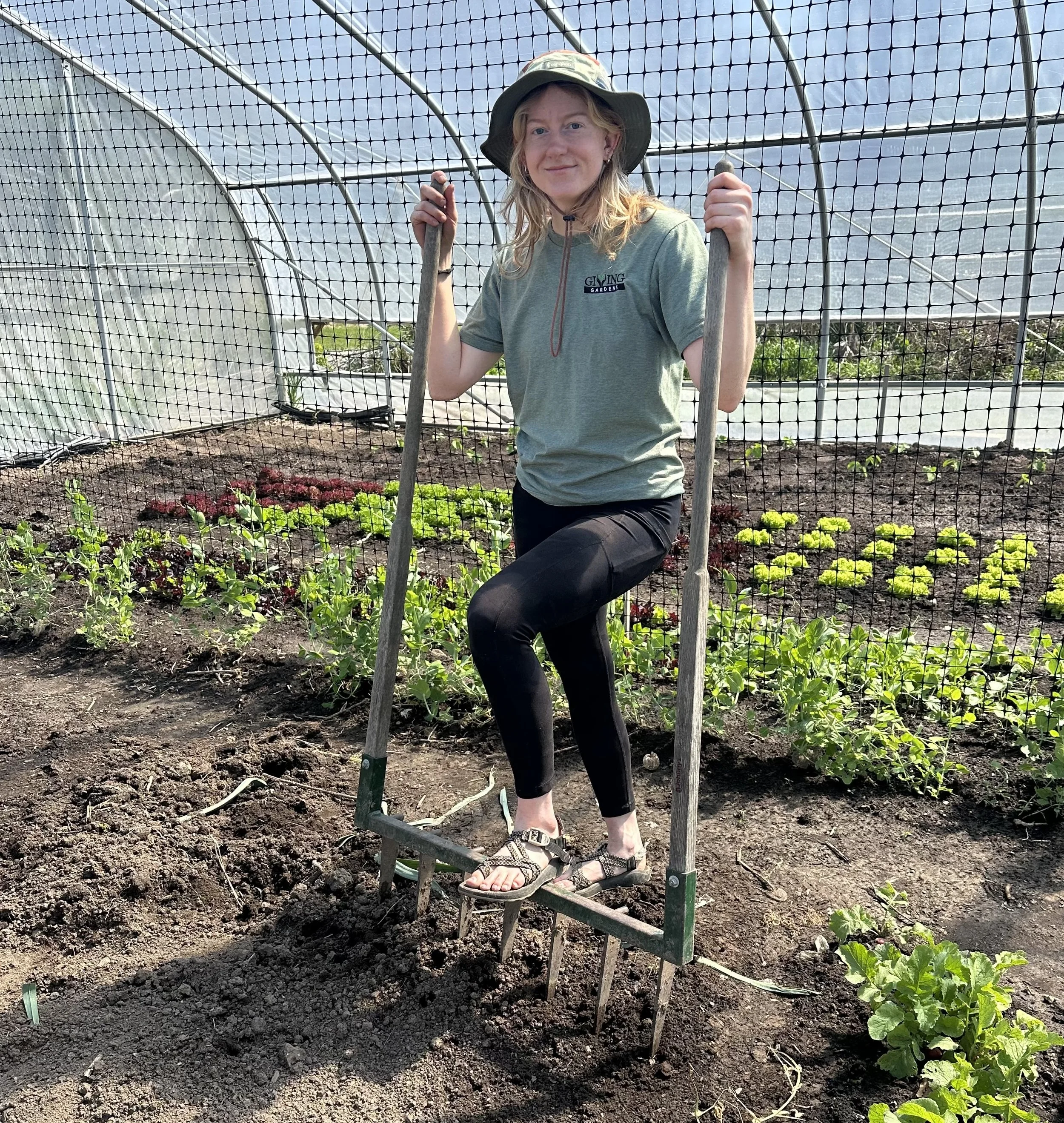
Whitney Fowler of The Giving Gardens standing with a broadfork.
Let me just say here that you never want to work in wet soil. In other words, if your soil is “sticky” or balls up easily, don’t work it at all, and for goodness ' sake, don’t run a roto-tiller through it. If you do that, your soil will be as hard as concrete, and you’ll have to work very hard (for years) to bring it back to health.
A lot of the work that I do in the spring is dedicated to creating a properly structured soil. Again, that’s easy to do in a soil that’s already in condition. In one of the public access gardens that we’ve managed for a couple of years (and where we’ve added large amounts of compost each season), we’ll rototill it a single time once it has dried out in the early spring, and then we shape beds with our landscape rake. If we get a big rain after tilling, we can just come in and rake the surface and plant right into those beds (note that every time we rake the surface of the garden after a rain, we reduce the weed seed count considerably).
However, if you are trying to garden in an area that has a history of being wooded or if the soil has been compacted or stripped away, you’re going to need to do something if you want healthy garden plants. One thing you can do right away is “lift” the soil with a spade (actually, I use a broadfork, but that’s not a tool that most people have easy access to) and work in a couple of inches of organic matter. I strongly recommend using finished compost (Jeff and Pam Vancil at Hart’s Nursery in Bushnell carry an excellent compost that you can buy by the bucket or pick up a load). Lift your soil with the spade and work in that 2 inches of compost until the top four inches of your garden soil are an even and fluffy mix of 50/50 compost and soil. If your soil has a lot of clay, you might also consider adding 2” of peat moss (break it up really well), the kind you can buy in big “bales” at your local hardware or big box store. By the way, unless I’m working in a big garden area, I’ll often work in organic matter with just my hands.
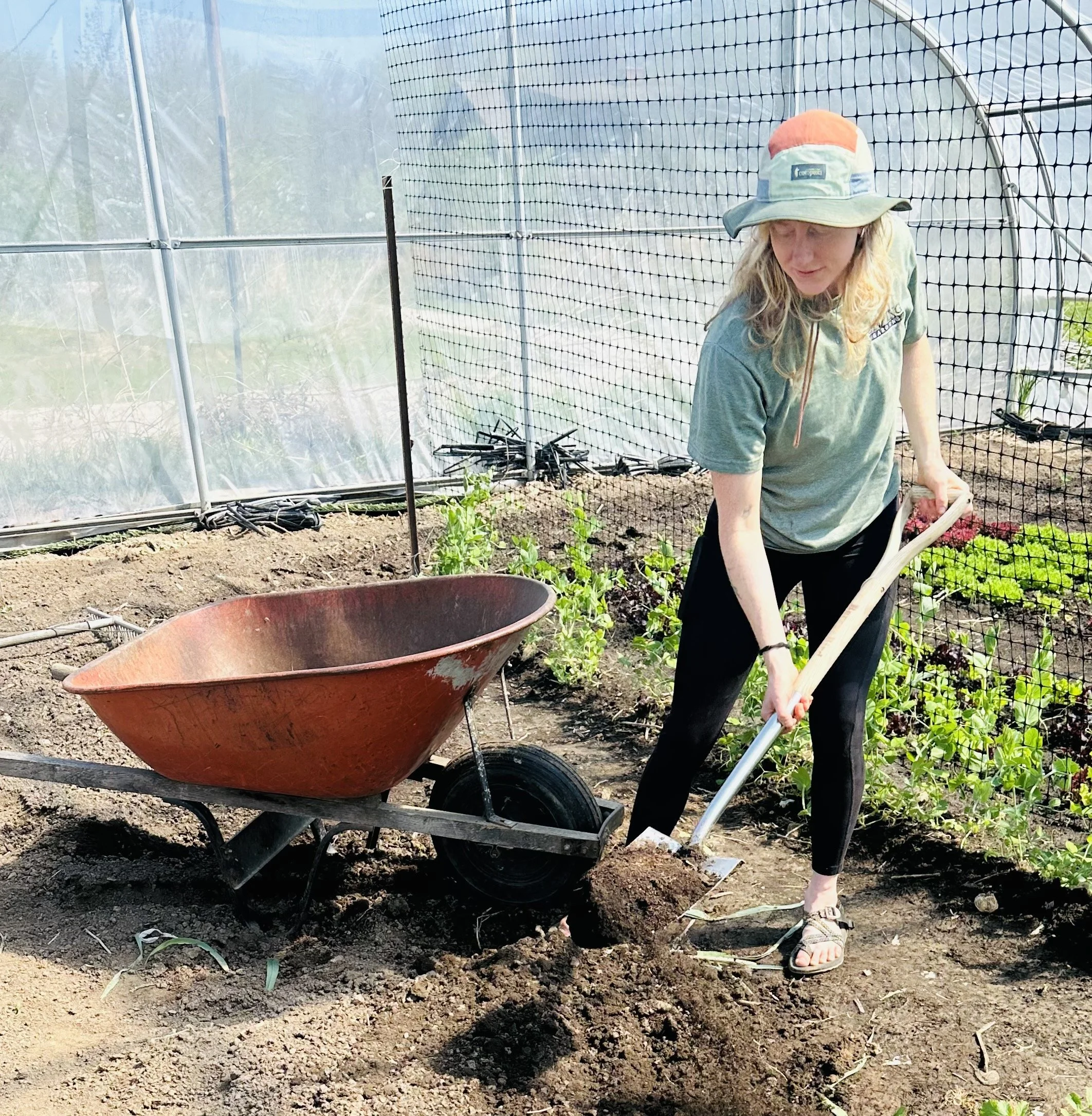
Whitney adding compost to the soil.
Note too that there is always a certain amount of natural compaction that happens during the previous growing season and over the winter. When I first work my garden soil in the spring, my preference is to lift it with a broad fork and then work a couple of inches of good, finished compost into the soil with my hands or a rake (generally we use a 3-prong cultivator for this task). Once the soil is in condition, I will often skip this step in the spring and add compost as a mulch instead.
This might be a good place to talk about why I think permanent raised beds are a bad idea. There are a number of reasons, but one of the main ones is that it is really hard to work and improve the soil structure in a raised bed. Some other things I don’t like about raised beds include: the unnecessary expense, less flexibility in garden planning, raised bed sides are a perfect place for perennial weeds to get established, raised beds dry out faster than regular garden beds… I could go on. In short, you don’t need to build raised beds to garden. In my opinion, they make gardening harder.
Over the long term, a great way to really improve the structure of your soil is to mulch with quality, organic matter. (Note! Do NOT mulch with wood chips in a vegetable garden. No, not even the paths. In a vegetable garden, my first choice is always to mulch with about 3 inches of quality compost (always after
carefully cultivating - don’t try to mulch in a garden with established weeds). Another great option after your plants are established is to mulch with wheat straw that is free of weed seed (not hay - Google it if you don’t know the difference). You can still buy square bales of wheat straw locally for a good price if you look around a little. Either of those kinds of mulches will feed the soil and improve the overall structure of your garden soil over time. Note that you should never mulch over weeds. The kind of mulching that I’m talking about only works if you’ve done the work to make your garden entirely weed-free beforehand.
A vegetable garden with soil that has good structure is a joy to work in and serves as the foundation for a successful garden. Best of luck to you this season!
John Curtis is a teacher, a nonprofit consultant, and the founder and director of The Giving Gardens, based in McDonough County.