
Making Homemade Broth from Scratch
By - Emma Rauschert
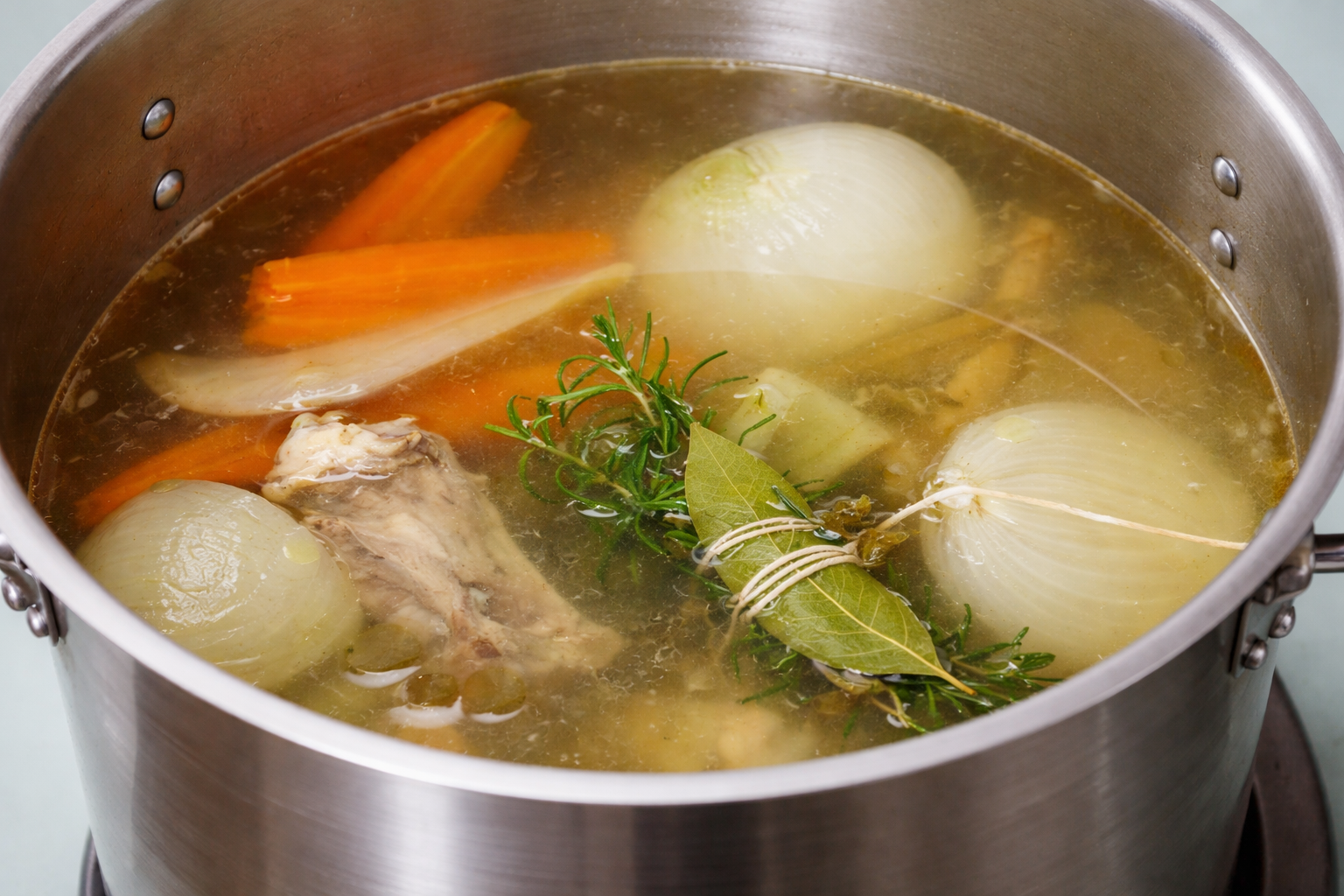
Homemade Bone Broth or Stock
Soup season is here. Canned soup, step aside. If you want a nutritious, hearty, flavorful broth for your soup base, look no further than humble kitchen scraps. The invention of bone broth dates back to the hunter-gatherer era, when people wouldn’t waste the bones of the animals that fell victim to human hunger. When all of the meat had been cleaned off the bones, people would simmer the bones in water for hours to extract vital nutrients that they couldn’t eat otherwise. Bone broth has even been used as a medicine in ancient days. Do you ever wonder why you eat chicken noodle soup when you have a cold? It’s the bone broth that comforts and soothes. Hunter-gatherers would roll in their graves if they saw the sad excuse of bone broth that we modern folk dump out of Campbell’s canned soups. YUCK.
What is the difference between bone broth and stock? Bone broth is cooked for over 12 hours and becomes very gelatinous and thick with collagen and minerals. Bone broth can be sipped alone or added to stews to create a hearty flavor. Stock is cooked between 4 - 12 hours and is thinner in texture. Stock can be used in gravies, sauces, marinades, and soups. The recipe I have listed is kind of a combination of the two to try to maximize the flavor of the stock and the nutritional value of the broth. This winter season, try making your own! Here’s how:
Ingredients Needed:
Beef bones or a chicken carcass (depending on whether you want chicken or beef bone broth) (see notes)
Kitchen Scraps (carrots, onions, garlic, celery, leeks, mushrooms, parsnips, turnips, bell peppers, tomatoes) (see notes)
Herbs (optional) (rosemary, oregano, thyme, basil, parsley, sage, bay leaf, etc.)
Spices (optional) (turmeric, salt, pepper, paprika, fenugreek, chili powder, coriander, etc.)
Water
Crockpot or stockpot (countertop vs. stovetop)
Cheesecloth or colander
Step 1: Roast the beef bones if using them (see notes).
Step 2: Throw your bones or carcass, kitchen scraps, and herbs, and/or spices into a stockpot or a crockpot. Cover everything in the pot with water. Simmer on low for 6 - 12 hours, or if using a crockpot, up to or over 12 hours. I don’t recommend cooking for over 6 hours on a stovetop unless you are very diligent.
Step 3: Pour everything through a cheesecloth or even a colander so the liquids and solids are separated.
Step 4: Use a funnel and pour into glass jars! And store in the fridge until use (see notes). You can also use the broth right away if you have a soup in mind for dinner.
This recipe is very forgiving of what you have. You can use whatever herbs and spices you think would taste the best. You can use whatever vegetable scraps you have leftover in your freezer bag. A good broth’s flavor will vary every time you make it.
Notes:
1. I buy whole chickens from our Mennonite friends who raise their chickens on a pasture. When I’ve cut everything off (the breasts, wings, and legs), and I have the carcass leftover, I set the carcass in the crockpot and let it simmer in water for hours to extract the nutrients from the bones. I use this simple gelatinous broth as a substitute for water in cooking rice, noodles, or use it in gravy or soups.
2. If making beef bone broth, check your local locker for bones. Sometimes they carry “soup bones.”
3. You can also omit the bones and carcasses entirely to make vegetable stock. Add a wider variety of vegetables in place of the bones.
4. Keep a gallon ziploc bag of kitchen scraps to use in your freezer, and once it’s full, make a batch of broth. Kitchen scraps can be carrot and celery tops, onion ends and tops, ends of leeks or green onions, mushroom stems, parsnip and turnip ends, etc.) Do not use vegetable scraps if they are moldy.
5. Beef bones can be roasted in the oven at 400 degrees Fahrenheit for an hour to get that lovely darkened color before being added to the broth. Flip the bones halfway through roasting to even out the browning. This roasting step adds a tremendous amount of flavor.
6. You can preserve broth by pressure canning it or freezing it for up to 6 months. It also stays fresh in the refrigerator for up to a week.