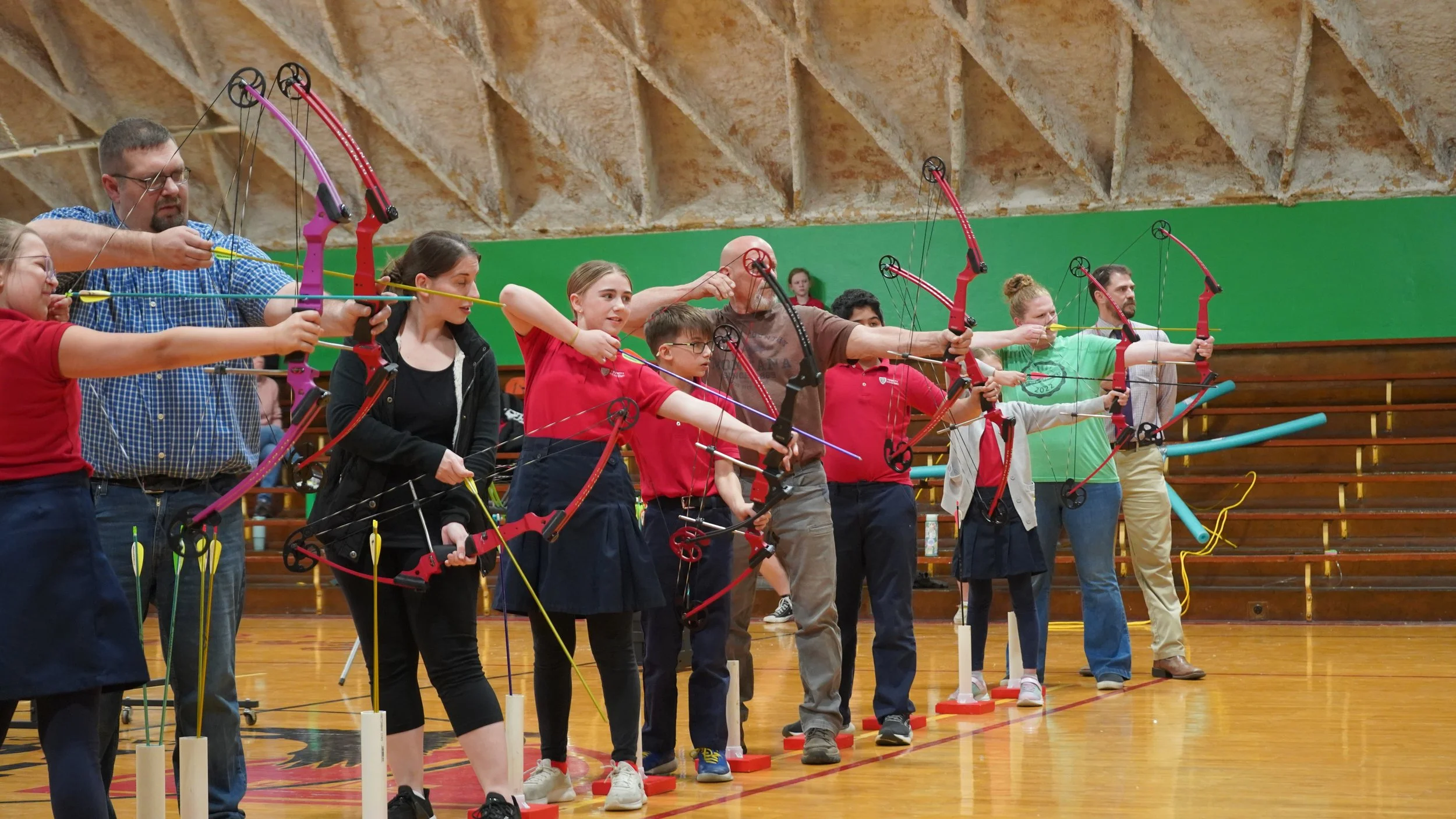
Classical and Christ-Centered: Trinity Academy’s Approach to Education
Josiah Chatterton - The Forgottonia Times™
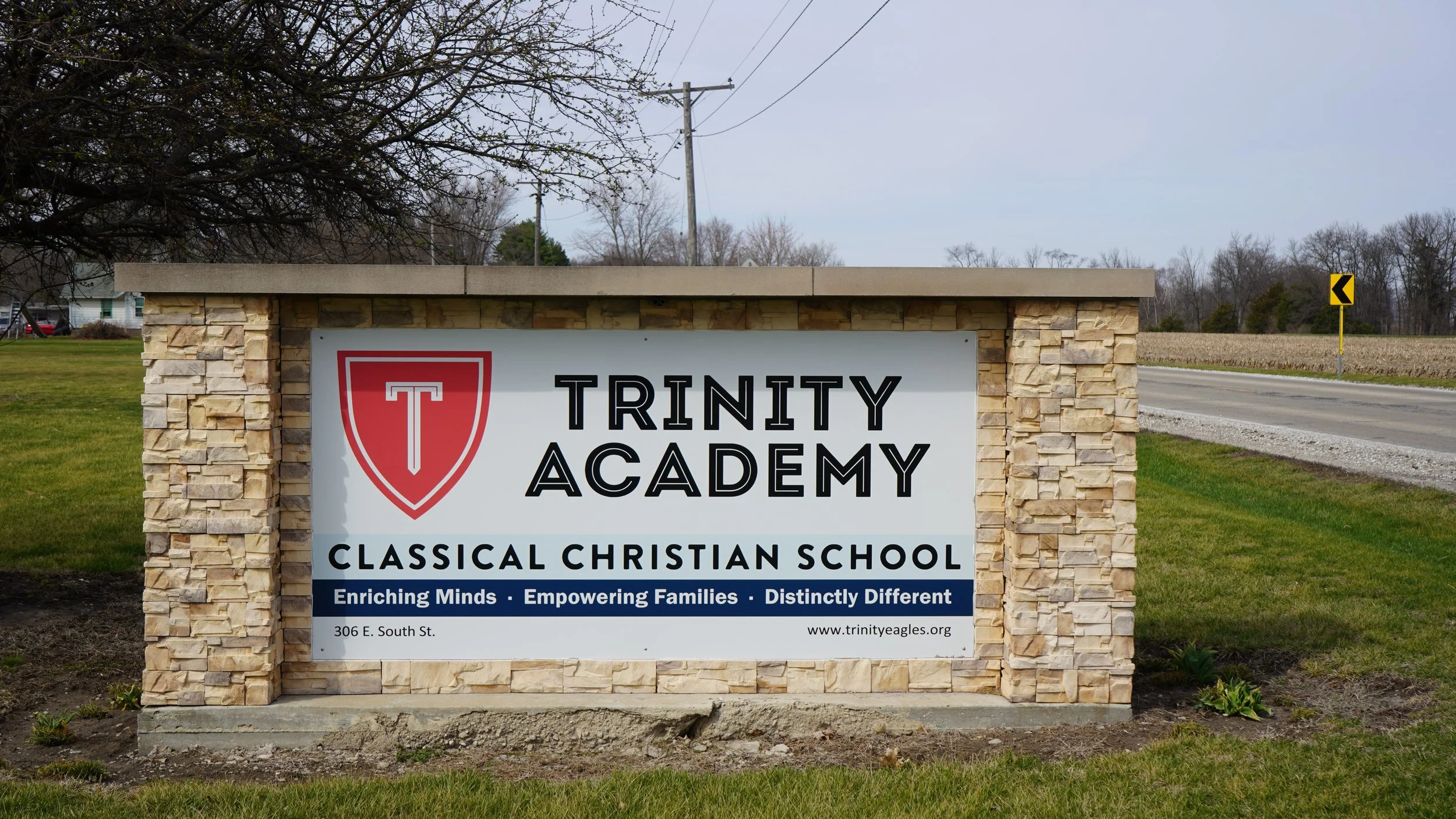
There are some places you walk into and immediately recognize that something is different. Not in a way that is flashy or manufactured, but in a way that feels steady, grounded, and purposeful. Trinity Academy is one of those places. Families who visit often struggle to put it into words, but they know it when they feel it— a quiet confidence and sense of order, and, as Administrator David Murray described it, a “palpable delight and joy.” It is the kind of environment where students are engaged and where education is not treated as a checklist, but as something far more formative. That difference, Murray is quick to point out, is not accidental. It is rooted in a deliberate approach to education— one that combines a classical model of learning, a hybrid partnership with families, and a Christ-centered foundation that shapes everything the school does.
On the surface, Trinity Academy’s academic performance alone would warrant attention. Standardized testing results from early 2026 show students consistently performing above national grade-level expectations across every division, with many students in grades four through seven operating one to three years ahead of where they would typically be expected. High school students are demonstrating college-level readiness, with grade-equivalent scores exceeding traditional benchmarks and national percentile rankings regularly landing in the upper 60s through 90s. But to fully understand Trinity, it is important to recognize that these outcomes are not the goal. They are the byproduct. Murray emphasized that the school does not teach to the test, nor does it structure its curriculum around chasing performance metrics. Instead, the focus is on mastery— on ensuring that students truly understand what they are learning, rather than simply moving through material. “The tests are just there to make sure there are no gaps,” he explained. The real work happens in the classroom, where students are asked to engage deeply with ideas, to ask questions, and to wrestle with concepts until they become their own.
That approach is rooted in the school’s classical model of education, which stands in sharp contrast to more modern, compartmentalized systems. At Trinity, subjects are not treated as islands. Instead, knowledge is understood as holistic. Literature, history, philosophy, and science are taught in ways that reinforce one another, allowing students to see the broader context behind what they are learning. For Ava Huston, an 11th grader who transferred from public school in eighth grade, that integration is one of the most meaningful differences. Ava expressed in an interview that Humanities has become one of her favorite subjects because of the way that it is taught, examining literature and history by immersing themselves in the context and timeline of what she is studying. This is an approach that encourages students to move beyond memorization and into synthesis, operating at the highest levels of learning where ideas are analyzed, connected, and applied.
This emphasis on thinking— rather than simply knowing— is one of the defining characteristics of Trinity Academy. Murray described it succinctly: “We don’t teach students what to think, but how to think”. In practice, that means classrooms rely heavily on Socratic discussion, where teachers guide rather than dictate, and where students are expected to articulate their reasoning and defend their ideas. It also means a strong emphasis on logic, a discipline that has largely faded from many modern curricula but remains central at Trinity Academy. Students are trained to identify bias, recognize logical fallacies, and evaluate arguments on their merits. They learn to spot circular reasoning, ad hominem attacks, and other common rhetorical tactics—not just in textbooks, but in real-world discourse, like media and political debates. In a time when information is abundant but clarity is often lacking, that skill set is increasingly valuable. It equips students not just to absorb information, but to navigate it with discernment.
Equally distinctive is Trinity Academy’s hybrid model, which redefines the role of parents in the educational process. Rather than positioning families as passive participants, the school views them as essential partners. Parents are referred to as “co-teachers,” and the structure of the school is intentionally designed to involve them in their child’s education. In some cases, that role may be filled by a grandparent or another individual willing to invest in the student’s life at home. As Murray put it, “when parents are involved, you get educated children; when they aren’t, it becomes a roll of the dice. If the parents are invested, the students will be invested.” Students in PreK through sixth grade spend three days at Trinity and two days learning at home, where co-teachers reinforce lessons, guide assignments, and engage directly in the students’ education. As students grow older, that dynamic begins to shift. Those in seventh through twelfth grade spend four days at Trinity and one day at home, gradually taking greater ownership of their learning. Many older students develop a high level of independence in their home studies. Laney, a 10th grader who joined Trinity in seventh grade, described a noticeable increase in workload and expectations compared to her public school experience. Yet, she found that this structure pushed her to grow and fostered a deeper sense of responsibility. What begins as a collaborative effort between parent and student gradually becomes a self-driven pursuit of knowledge and understanding.
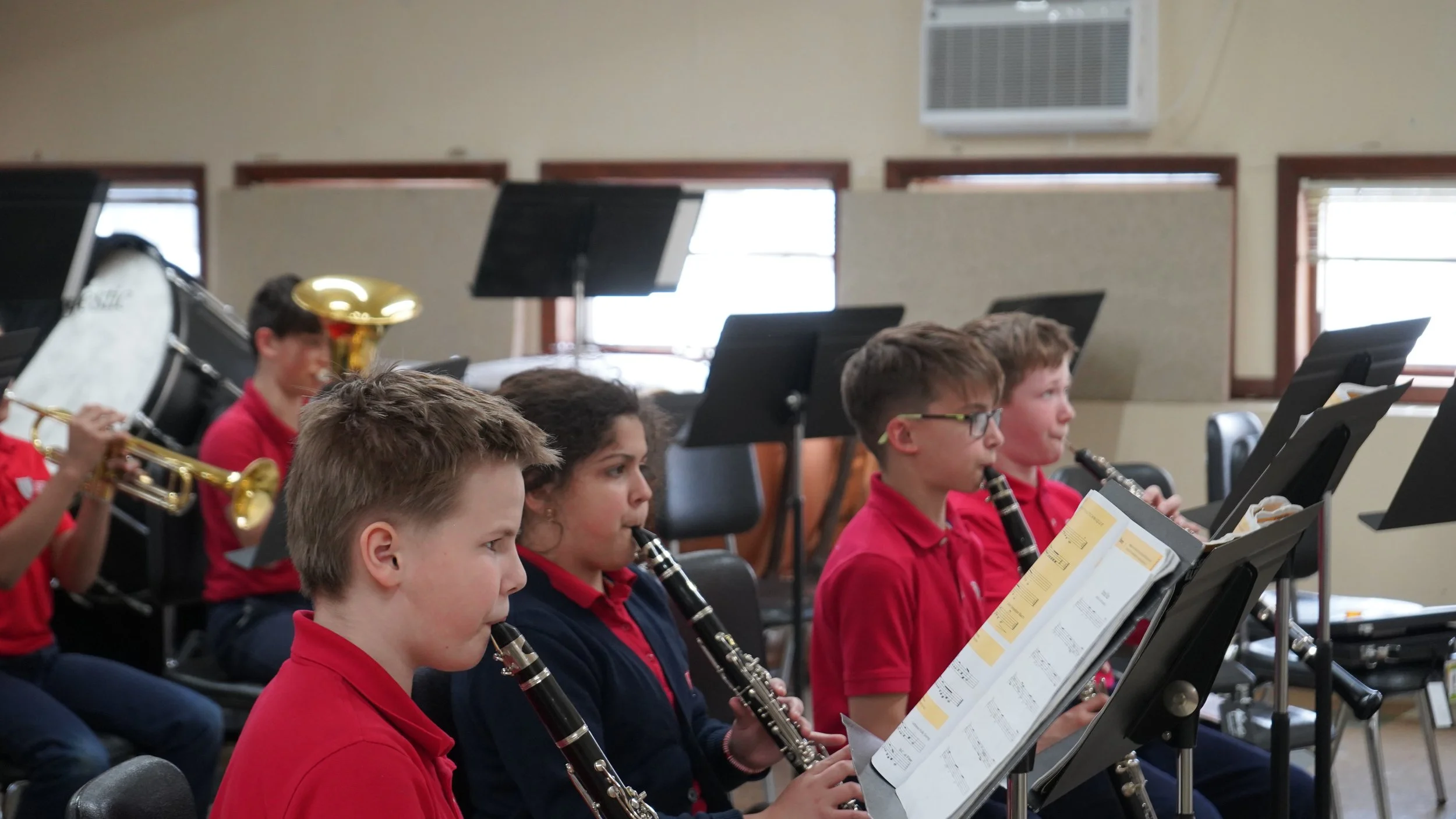
Underlying all of this is Jesus Christ as the foundation. At Trinity Academy, faith is not an addition to the curriculum; it is the lens through which everything is taught. Students engage in Bible study at every grade level, but the integration of faith extends far beyond formal instruction. Teachers are expected to have an active relationship with the Lord, to model that faith in their daily interactions, and to invest in the spiritual development of their students. This manifests in both structured and spontaneous ways— through prayer, through mentorship, and through moments of guidance that arise naturally throughout the day. Murray described a culture where teachers are encouraged to pause lessons when needed, to address real-life situations, and to speak into the lives of their students with wisdom and discernment. “It’s the body of Christ working in conjunction with one another in a school environment,” he said. That philosophy shapes not just what is taught, but how it is taught, creating an environment where education is as much about character as it is about content.
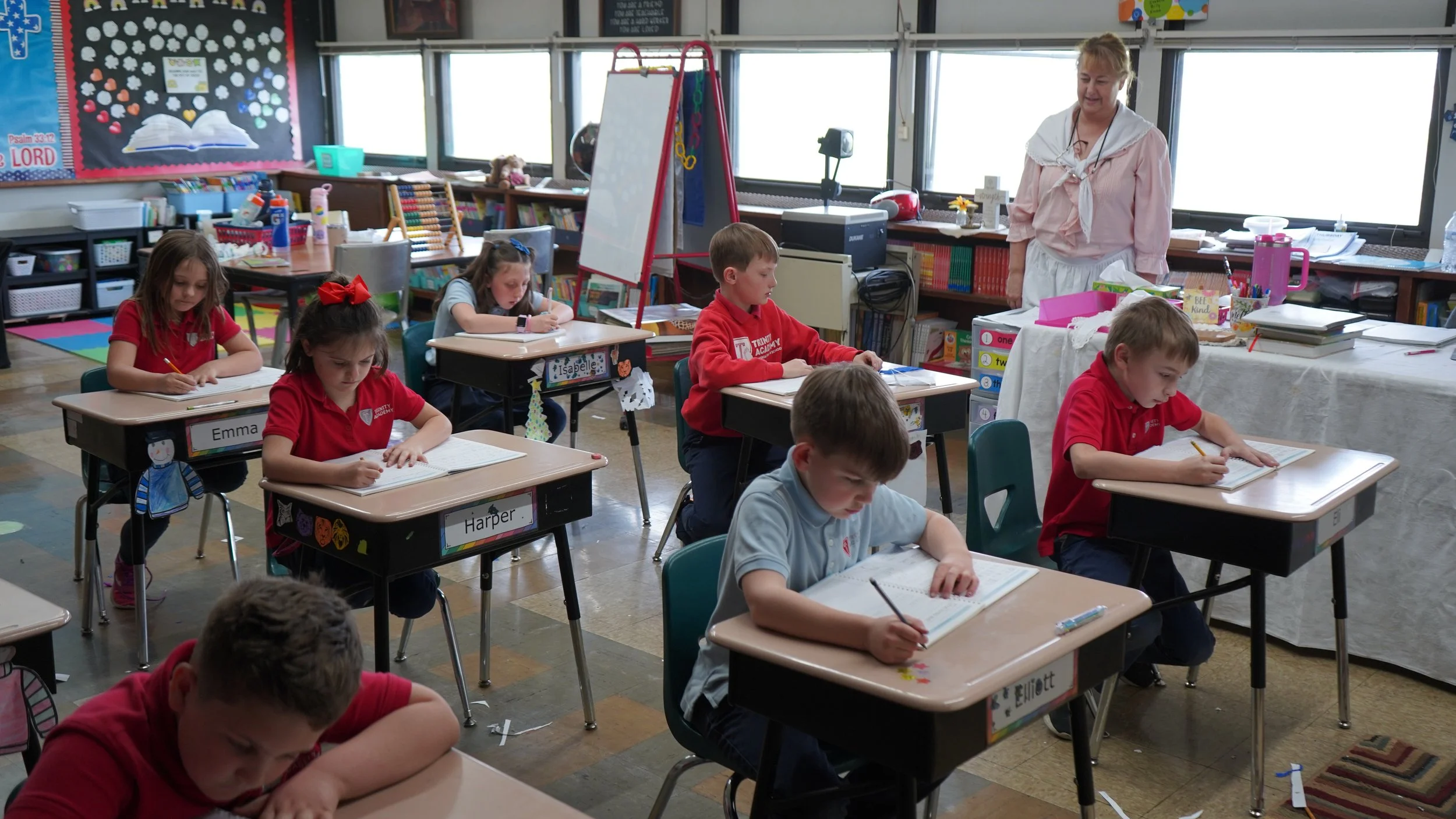
The results of that approach are evident not only in academic performance but in the lives of the students themselves. Ava Huston noted that one of the most significant changes for her was in her faith. “My faith strengthened when I came to Trinity. I didn’t have an active faith in public school. I wasn’t in an environment where faith mattered. ” At Trinity, that environment is intentional. Students are encouraged to ask questions and develop a faith that is both informed and personal. That process of formation begins early. In a story Murray shared from a kindergarten classroom, a teacher posed the question: “What is love?” Without hesitation, a student responded with Scripture: “Love the Lord your God with all your heart, soul, mind, and strength… and love your neighbor as yourself.” It was not a rehearsed answer, nor one prompted by instruction in that moment. It was, as Murray described, something that was simply “there— on his heart.” That is the kind of formation Trinity seeks to cultivate— a foundation that is internalized, not imposed.
Trinity Academy’s origins reflect the same sense of purpose that defines its present. Founded in 2014 by a small group of families, the school began with a vision that, by conventional standards, did not make much sense. A classical, Christian school in a rural community, operating with limited resources but a broad mission, was not an obvious formula for success. And yet, over the past decade, that vision has taken root and grown. Today, the school serves families from across multiple counties and is preparing to graduate its fourth senior class. That growth, Murray believes, is not merely the result of strategic planning, but of provision. “I don’t think the school would exist, except by the hand of God,” he said.
In many ways, Trinity Academy exists as a response to the broader cultural moment. Murray spoke candidly about the challenges facing today’s students— constant exposure to information, competing influences from media and technology, and a lack of tools to process what they encounter. “We are raising children in a unique moment in history,” describing a world where opinions are abundant but wisdom often feels scarce. In that context, the role of education becomes increasingly significant. It is not simply about preparing students for a career, but about equipping them to navigate a complex and often confusing world. Trinity’s approach addresses that need directly, focusing on clarity, discernment, and a commitment to truth that is not shaped by trends or popular opinion. As Murray put it, “Truth is something to be pursued— and ultimately, truth is grounded in Christ.”
For families considering Trinity Academy, the decision ultimately comes down to more than academics or structure. It is a question of priorities— of what kind of education will best prepare a student not just for the next stage of schooling, but for life itself. Trinity offers a model that is both rigorous and relational, academically strong and deeply rooted in faith. It asks more— but it does so with purpose, forming students not only in knowledge, but in character and conviction.
Murray put it simply: “I don’t think you will regret Trinity. It is a worthwhile investment.” And for families looking for something deeper— and for those who see the value in supporting it— Trinity Academy is offering something increasingly rare: a place where students are formed not only to succeed, but to lead, to think clearly, and to live with conviction in a world that needs exactly that.