
As The Oak Goes
Josiah Chatterton - The Forgottonia Times™
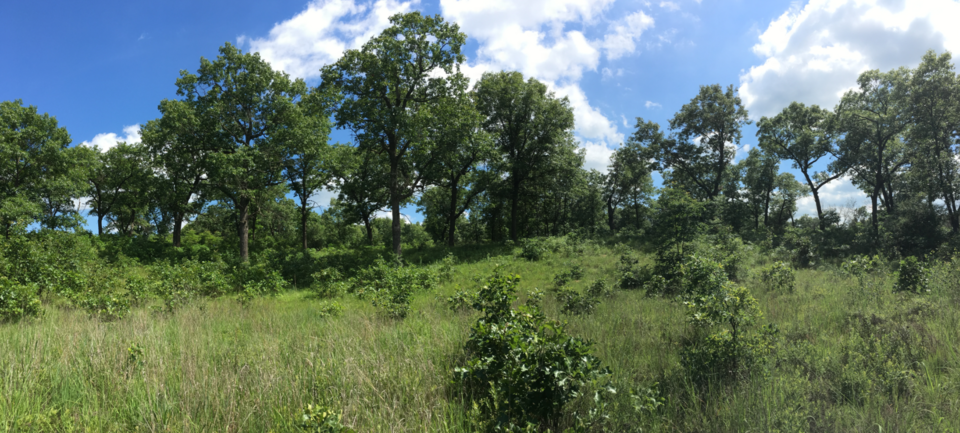
Now and then, in the right patch of timber, you fight through the woods you recognize and step into one you don’t. You find them on ridges where the soil thins out, and the wind has a little more say. A white oak stands there, not straight and crowded like a tree grown in competition, but with wide limbs stretched out in every direction, thick and heavy, built over centuries in open space. This is a tree that has stood there longer than the roads that lead to it, longer than the fence lines below it, longer than most anything we recognize as part of our modern landscape. The ground beneath it isn’t choked, and sunlight makes it all the way down. You can walk without weaving, see freely, and for a moment, it feels like you’ve stepped into a place that doesn’t belong here.
Then you leave that ridge and step back into the woods most of us have come to accept as normal. The canopy closes in, the understory thickens, and the light fades out ten yards in front of you. It feels different—heavier, tighter, harder to move through—but familiar enough that we rarely question it. That’s the part worth paying attention to, because the forests we think we know—the ones filling in across west central Illinois—are not the forests our ancestors knew, and they are not moving in a direction that sustains what was here before.
For a long time, the prevailing idea has been simple: woods are best left alone. Let them grow, let them fill in, let nature take care of itself. It’s a belief rooted in good intentions, and in a way, it feels respectful. But the problem is that these woods were never hands-off. What we’re seeing now isn’t nature left alone—it’s nature missing something it once depended on.
Tony Kloppenborg, a habitat specialist with the Illinois Recreational Access Program, sees that misunderstanding often.
“One big misconception is that one can simply leave a timber stand alone and let things run their course. This can and will often lead to altered species composition and invasion of unwanted non-native species.”
What replaces the old system isn’t chaos—it’s something quieter and easier to overlook. A gradual shift in species, a slow closing of the canopy, and a steady reduction in the amount of sunlight reaching the forest floor all happen without a clear moment of change. It doesn’t stand out year to year, but over time, the difference becomes undeniable. Many landowners have already seen it without naming it—woods getting thicker, travel becoming harder, and the ground losing the diversity it once held.
The woods that once covered this region weren’t dense in the way we think of forests today. They were open, messy, and full of light. Oaks dominated—not because they crowded everything else out, but because they were built to survive the conditions that kept other species in check. Those conditions weren’t random. They were consistent, and they shaped everything that grew here.
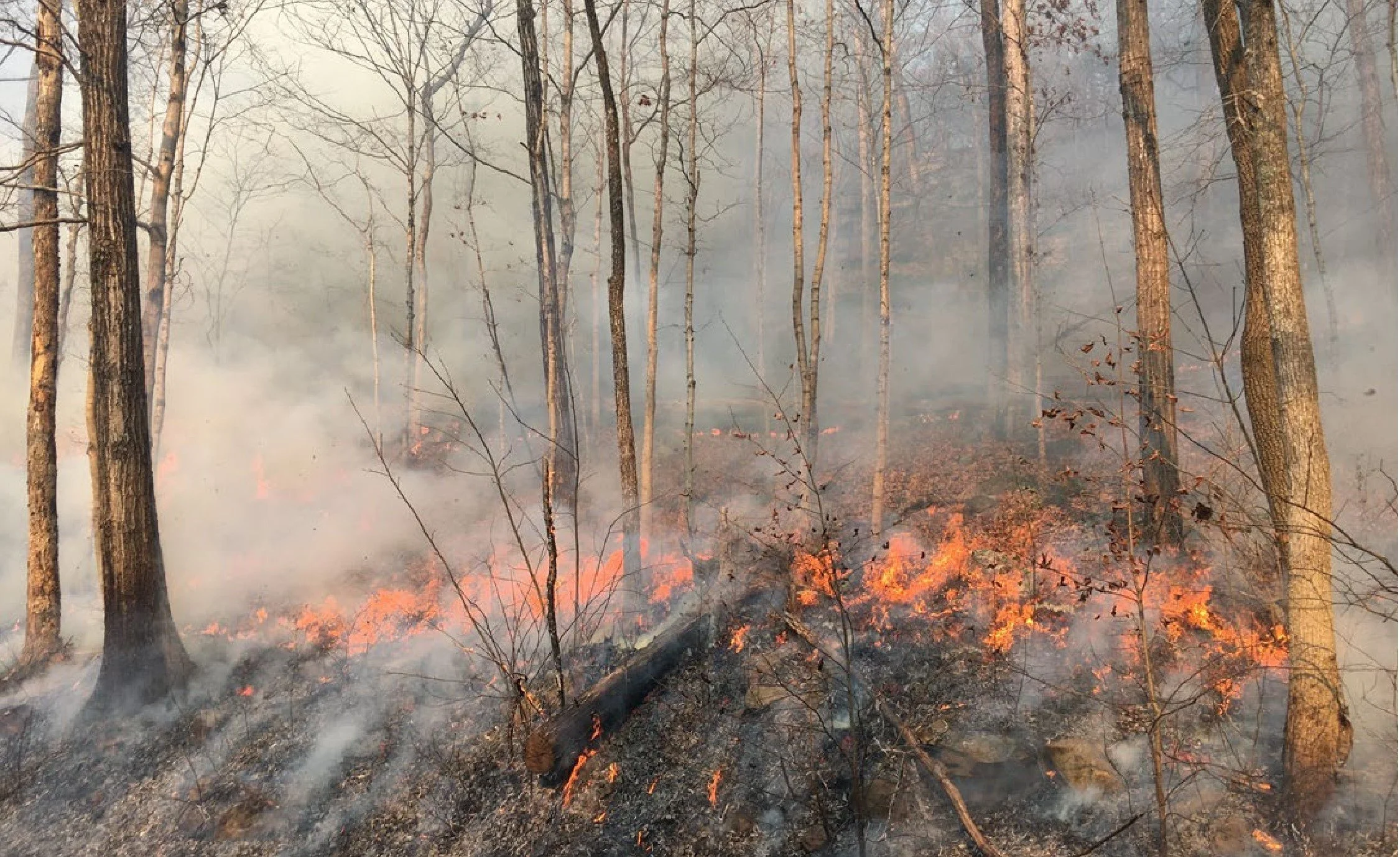
One of those forces, more than anything else, defined the system: fire.
Not the kind that wipes a place clean, but the kind that moves through it. Low, steady burns that cleared out the understory, kept shade-tolerant species from taking over, and gave sunlight a path to the ground. It determined what stayed, what receded, and how the forest structured itself over time. When fire was removed, the balance didn’t hold—it shifted in a direction that favored an entirely different kind of forest.
Tony explains it simply:
“Fire on the landscape was and is very important for shaping our oak ecosystems. You can think of fire as a natural check and balance… removal of this check and balance has allowed shade-tolerant trees to become more represented.”
Walk through almost any unmanaged timber today, and the pattern becomes clear. The canopy above might still be oak—big, old, and holding on—but beneath it, the next generation tells a different story. Maples, elms, and other shade-tolerant trees fill the gaps, while the understory thickens and the available light disappears. Once that light is gone, the system begins to reinforce itself, making it even harder for oaks to return.
The problem doesn’t stop there. Invasive species, particularly bush honeysuckle, accelerate the process by crowding out native plants and blocking even more light from reaching the ground.
“With honeysuckle, you will notice often times it has completely shaded out the ground beneath it, even to the point of bare dirt,” he said.
What appears to be a full, healthy forest from the outside often reveals itself as something far more limited when you step inside it—less diversity, less regeneration, and less of the life that once defined it.
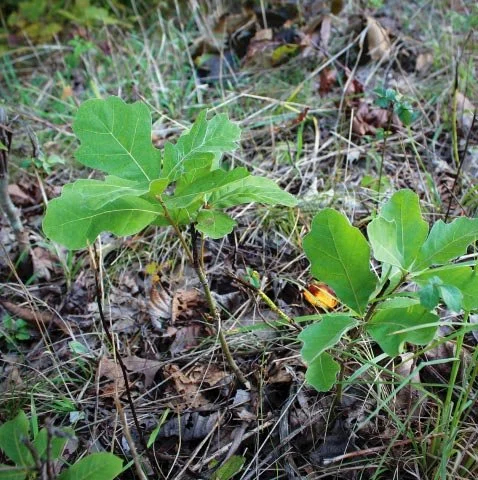
The most concerning part of this shift isn’t what we see today, but what isn’t coming up beneath it. Oaks are shade-intolerant, meaning they require sunlight and space to compete. Without those conditions, they struggle to regenerate and eventually disappear from the system.
Across Illinois, the data reflect this same pattern. While oaks still dominate the upper canopy, they make up only a small portion of the younger trees growing beneath them. In some parts of the state, oaks account for less than 10 percent of trees in the smaller size classes, even as they make up the majority of the largest, oldest trees . Over time, that imbalance leads to a fundamental change in the composition of the forest—one that does not correct itself without intervention.
This shift matters for reasons that go far beyond the trees themselves. Oaks sit at the center of the entire ecosystem, supporting everything from large game species to insects, birds, and even fungal and bacterial life.
That level of influence is difficult to replace. As oak systems decline, the effects ripple outward, altering habitat, food sources, and the overall structure of the landscape.
As Aldo Leopold once wrote,
“A thing is right when it tends to preserve the integrity, stability, and beauty of the biotic community.”
Measured against that standard, the trajectory of many of our woods raises an uncomfortable question about where things are headed.
Most landowners take pride in their ground. They hunt it, walk it, admire it, and expect it to be there for the next generation in much the same shape they found it.
But the woods don’t stay the same on their own—not anymore. Under today’s conditions, leaving them alone doesn’t preserve them. It shifts them, slowly and steadily, into something different. The intention might be to protect what’s there, but the outcome often moves it further away from what it used to be.
The condition of the woods ultimately reflects what’s happening to them, whether that’s active management or simply letting the current trajectory run its course. The good news is that the trajectory isn’t fixed. Oak systems are resilient, and when the right conditions are brought back, they respond.
Across Illinois, landowners and conservation groups are starting to reverse the pattern by opening the canopy, controlling invasive species, and reintroducing disturbance where it makes sense.
The goal isn’t to tear a forest down—it’s to rebuild the conditions that allow it to function the way it once did. Bringing light back to the forest floor by opening the canopy, removing invasives, and periodic fire has proven to be one of the most effective ways to encourage oak regeneration and restore biodiversity . It’s not quick work, but over time, the results show up in the structure of the woods themselves.
For landowners, the first step is simply seeing their woods clearly. That means walking the property, paying attention to what is growing beneath the canopy, and recognizing whether oaks are being replaced or supported. From there, reaching out to professionals can provide a path forward.
“Contacting your local Department of Natural Resources or Natural Resource Conservation Service offices would be a great start,” Tony said. “They will provide technical support and cost-share funding opportunities.”
With the right guidance, even small steps can begin to shift the trajectory of a stand.
There are still places where you can see what this region used to be—pockets where the canopy opens, sunlight reaches the ground, and the structure of the woods feels balanced. These areas are examples of what is still possible for the future.
The disappearance of oak country isn’t loud. It doesn’t announce itself. It happens gradually, layer by layer. But once you recognize the pattern, the choice becomes harder to ignore.
Because those old oaks—the ones with limbs stretched wide in the open—are more than just part of the scenery. They are a measure of the system that supports them. And as the oak goes, so will everything that depends on it.