
Freedom in the Shadows: Galesburg and the Underground Railroad
By - Brenna Chatterton
For many of us, the Underground Railroad first appeared in childhood history lessons — a mysterious, almost cinematic network of secret routes and coded language. “Stations.” “Conductors.” “Passengers.” It sounded like something from a novel.
But for residents of Forgottonia, the story is far closer to home than many realize.
Long before it was a chapter in a textbook, the Underground Railroad was an active, dangerous, and deeply personal operation that ran through this community. Some historians have described Galesburg as “probably the principal underground station in Illinois.” While exact numbers are impossible to verify — secrecy was essential to survival — evidence suggests that dozens of locations in and around the city were connected to the effort.
A National Network of Courage
The Underground Railroad was not a literal railroad but a decentralized network of Black and white abolitionists who provided shelter, food, money, and transportation to enslaved people escaping bondage in the South. Operating from the late 18th century until the Civil War, the system relied on coded language and quiet coordination.
Homes and churches that offered refuge were called “stations” or “depots.” Those who guided freedom seekers from one stop to another were “conductors.” Property owners who sheltered them were “stationmasters.”
The movement is often associated with well-known figures like Harriet Tubman, but the network depended just as heavily on local farmers, ministers, teachers, and families whose names rarely appear in national histories.
Early organization of the movement is often traced to Quaker communities. Abolitionist Isaac T. Hopper established a coordinated network in Philadelphia in the early 1800s, and Quaker groups in North Carolina laid foundations for routes and safe houses that expanded northward. Over time, paths stretched through Pennsylvania and New England toward Canada, and across Ohio into Indiana, Illinois, and Iowa.
That geography matters.
Illinois bordered slave states and served as a critical passageway for those heading north. And within Illinois, Galesburg stood out.
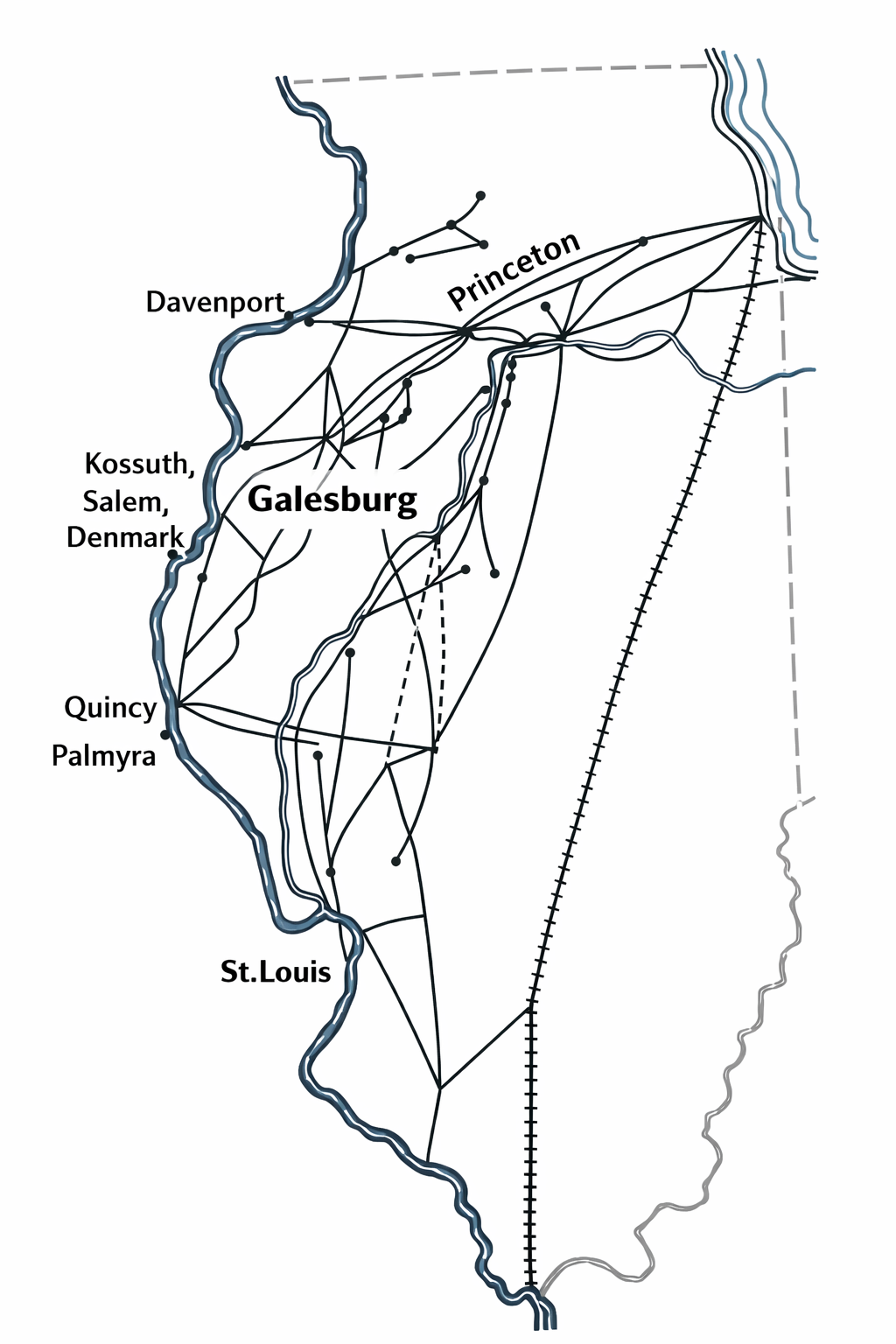
Why Galesburg?
Galesburg’s abolitionist roots ran deep from its founding. George Washington Gale, the city’s founder, was a Presbyterian minister and outspoken opponent of slavery. The culture he helped establish — shaped by reform movements, religious conviction, and educational institutions — created fertile ground for Underground Railroad activity.
Several prominent residents were involved in the network, including Nehemiah West, Samuel Hitchcock, George Davis, and others whose homes quietly became places of refuge.
Among the most remarkable stories is that of Susan Richardson. Enslaved in Sparta, Illinois, by Andrew Borders, she escaped in 1840 and made her way to Galesburg. Rather than simply seeking safety for herself, Richardson turned her home into a station on the Underground Railroad. For decades, she assisted others pursuing freedom, fully aware of the risks involved.
Her courage reflects an often-overlooked truth: many of the people most active in the Underground Railroad were formerly enslaved themselves.
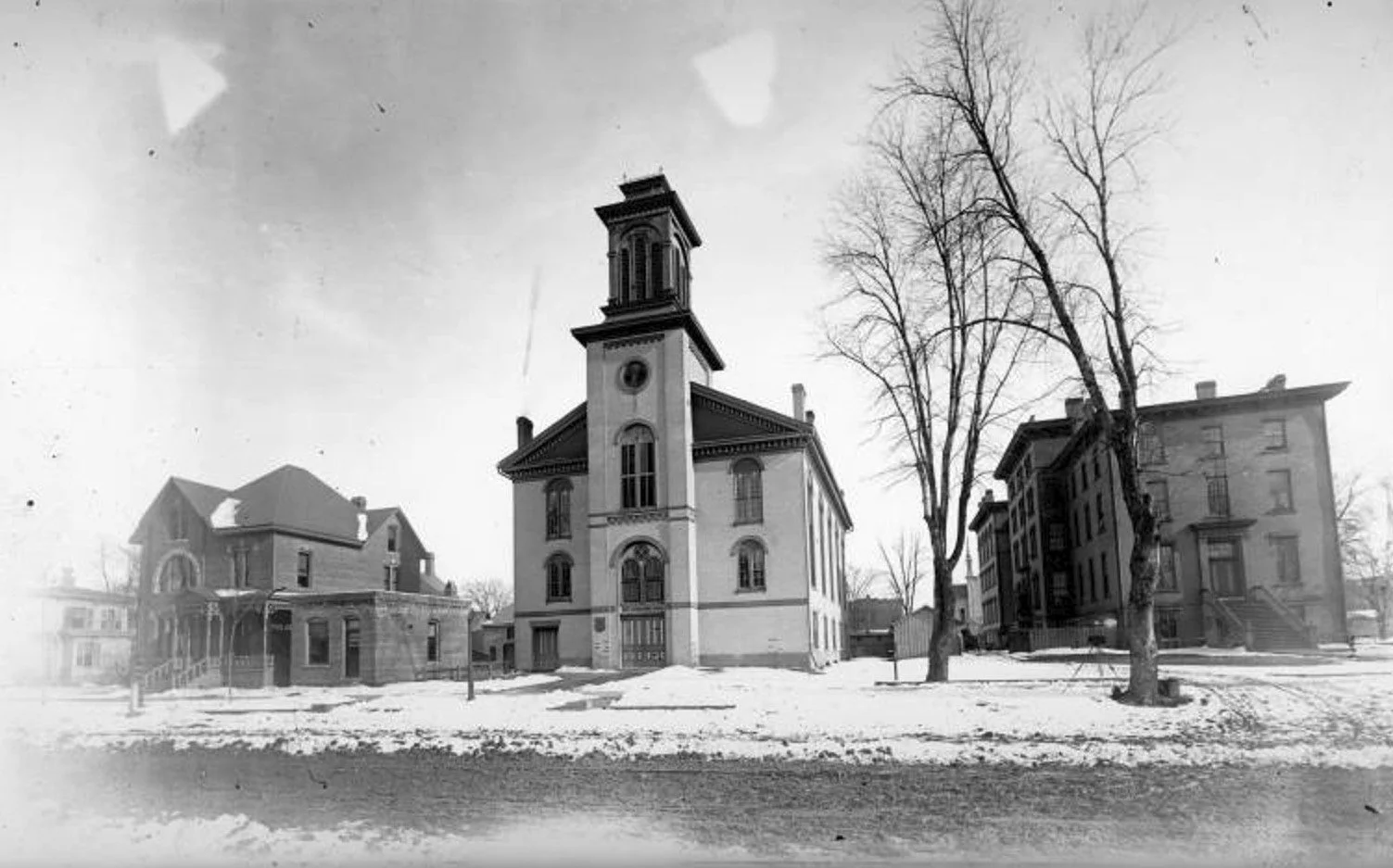
The First Congregational Church, also known as Beecher Chapel.
A City of Safe Houses
Local historians have identified dozens of sites in Galesburg with ties to Underground Railroad activity. While not every story can be verified in detail — secrecy was critical, and written records were often avoided — multiple accounts and later recollections point to the city’s extensive involvement.
One significant location stood on the Public Square, at the site now occupied by the Central Congregational Church. The original Old First Church, formed in 1837, is widely believed to have served as a depot. Accounts describe freedom seekers hiding in the church’s belfry.
When Booker T. Washington visited Galesburg in 1900, he referenced the very spot, reportedly noting that he was pleased to speak “on the spot where once stood one of the garret stations of the old underground railroad.” By the turn of the century, the secret was no longer secret — but its legacy endured.
Another well-known site was Beecher Chapel. Reverend Edward Beecher, a staunch abolitionist, and his sister Harriet Beecher Stowe, author of the influential novel Uncle Tom's Cabin, were both connected to Galesburg. Their residences and church properties were reportedly used to harbor those escaping slavery.
A preparatory school once located at Cherry and Main streets also served as a station, adding educational institutions to the list of safe havens.
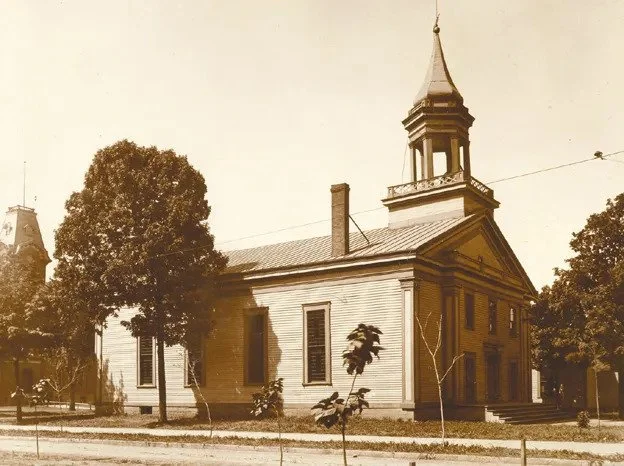
Central Congregational Church in Galesburg.
The Risk Was Real
Romanticized as it sometimes is, Underground Railroad work was dangerous and illegal.
The U.S. Constitution included the Fugitive Slave Clause, requiring the return of escaped enslaved people to their owners. The Fugitive Slave Act of 1793 strengthened enforcement, authorizing slaveholders and their agents to pursue runaways across state lines and penalizing those who assisted them.
Then came the Fugitive Slave Act of 1850, part of the Compromise of 1850. This law imposed even harsher penalties. Federal officials were required to arrest suspected fugitives based largely on a claimant’s sworn testimony. Citizens could be fined heavily or imprisoned for providing assistance. Law enforcement officers who refused to cooperate faced penalties themselves.
Even in Illinois — officially a free state — legal loopholes surrounding “indentured servitude” allowed forms of continued bondage. Freedom seekers were not automatically safe upon crossing state lines.
In this environment, helping someone escape slavery was not a symbolic act. It was a criminal offense that could destroy reputations, livelihoods, and families.
And yet, people here chose to act.
A Legacy in Our Backyard
It is impossible to know exactly how many men, women, and children passed through Galesburg under cover of darkness. But the number of documented locations and the testimony of later generations suggest the city played a central role in Illinois’ Underground Railroad network.
Imagine what that meant in practical terms. Wagons arriving quietly at night. Church doors opening after dark. Families hiding strangers in attics or cellars. Children instructed not to speak of what they had seen.
The risk was shared. The silence was intentional. The commitment was moral.
Today, the streets and buildings look ordinary. Homes have been remodeled. Churches rebuilt. Corners repurposed. But beneath the surface lies a history of defiance and compassion.
For a community like Galesburg — shaped by faith, reform movements, and a belief in human dignity — the Underground Railroad was not just a national story. It was a local one. It unfolded in attics and sanctuaries, on dirt roads and public squares.
That legacy invites reflection.
The Underground Railroad was not inevitable. It existed because ordinary people decided that unjust laws did not outweigh human freedom. They weighed the cost — fines, imprisonment, violence — and chose to help anyway.
In remembering this history, we are not simply revisiting a dramatic chapter of the past. We are recognizing that courage once lived quietly in our neighborhoods.
Your backyard may have been a station. Your street may have sheltered a freedom seeker. And whether or not we know the exact addresses, we know this: Many Galesburg residentsstood on the side of freedom when doing so required extraordinary bravery.
That is a history worth telling — and worth preserving.